
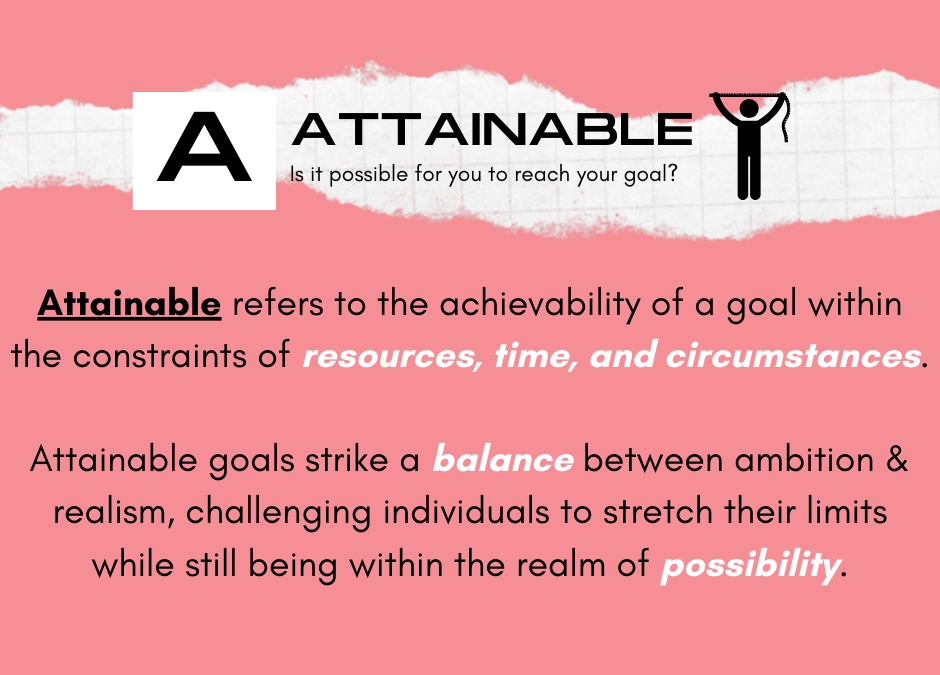
Setting goals is essential for personal and professional growth — but not all goals are created equal. For a goal to be truly effective, it must be attainable. Attainable goals balance ambition with realism, giving you a target that challenges you while still being within reach.
In this article, we’ll explore the five key ingredients that make goals attainable, and how you can apply them to turn your aspirations into achievable outcomes.
1. Realistic Self-Assessment: Know Where You’re Starting From
Every attainable goal begins with an honest look at your current situation. Before you commit, pause to evaluate your skills, resources, and limitations.
Ask yourself:
- What strengths can I leverage right now?
- What gaps might I need to close to reach this goal?
- Do I have the time, tools, and support to get started?
Being grounded in your current reality doesn’t limit you — it positions you to plan strategically. You can always stretch beyond your comfort zone, but you’ll do so with a clear understanding of what’s needed to succeed.
Try this: Write a short “reality snapshot” of where you are today. Capture your current capacity, commitments, and constraints. This is your baseline for growth.
2. Clear Action Plan: Turn Vision Into Steps
An attainable goal without a plan is just a wish. A clear, actionable plan gives structure to your ambition.
Break your big goal into smaller, specific steps that you can tackle one at a time. This keeps motivation high and prevents overwhelm.
Example:
If your goal is to “change careers,” your action plan might include:
- Research new fields and identify skill gaps.
- Enroll in one online course to fill a gap.
- Update your CV and LinkedIn profile.
- Apply to three targeted roles.
Progress becomes easier when each step is clearly defined and time-bound.
User prompt: What’s one action you can take today that moves you 1% closer to your goal?
3. Measurable Milestones: Celebrate Progress Along the Way
Big goals take time, and without measurable milestones, it’s easy to lose momentum. Create checkpoints — small wins that track progress and boost motivation.
Milestones might include:
- Reaching a specific number (e.g., 10 clients, 5kg lost, R10,000 saved)
- Completing a task (e.g., first draft finished, portfolio uploaded)
- Reaching a time marker (e.g., 30 days of consistency)
Each milestone gives you feedback: Is what I’m doing working? Do I need to adjust?
Try this: Break your goal into three checkpoints: early win, mid-progress, and final target. Reward yourself at each milestone.
4. Time-Bound Deadlines: Anchor Your Commitment
Time gives structure to intention. Without a deadline, even the best goal can drift indefinitely.
Set a clear timeline that feels both realistic and motivating. A time-bound goal pushes you to focus and measure progress regularly.
Example:
- “I will complete a 10-module certification course within 12 weeks.”
- “I’ll launch my website by 30 November.”
Pro tip: Use mini-deadlines inside your larger goal. Weekly or bi-weekly targets keep you accountable and create a rhythm of progress.
5. Flexibility and Adaptability: Stay Agile When Life Happens
Even the best-laid plans meet unexpected detours. Flexibility doesn’t mean abandoning your goal — it means adjusting the route when needed.
Be prepared to revisit your timeline or strategy if circumstances shift. The key is to stay committed to the outcome, but flexible about the path.
Ask yourself:
- What’s non-negotiable about this goal?
- Where can I adjust without losing focus?
Adaptability builds resilience. It turns obstacles into learning moments instead of roadblocks.
User reflection: Think of one past goal that didn’t go as planned. What adjustment could have helped you stay on track?
Bringing It All Together
Crafting attainable goals is about finding the sweet spot between ambition and realism. When you combine honest self-assessment with a clear plan, measurable milestones, time-bound structure, and flexible mindset, you create goals that you can actually achieve — not just dream about.
Quick Recap:
- Assess your reality. Know your strengths, limits, and resources.
- Plan the steps. Break goals into small, manageable actions.
- Track milestones. Celebrate progress to stay motivated.
- Set deadlines. Create accountability with clear timeframes.
- Stay adaptable. Adjust when needed, but don’t lose sight of your goal.
Challenge for the week: Choose one goal that matters most to you right now. Write down three concrete actions, one milestone, and a deadline. Then take the first small step — today.
